





|
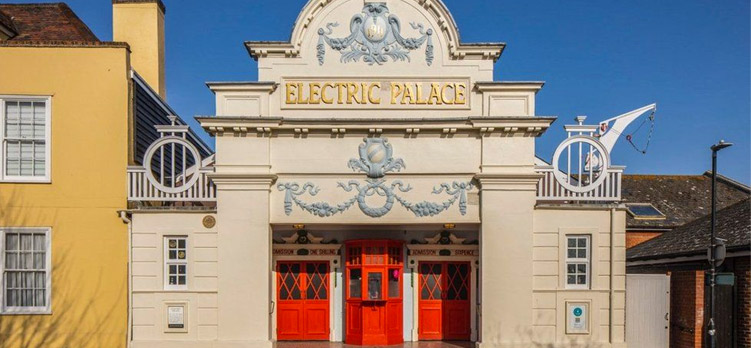
The Electric Palace in Harwich was first opened on 29th November 1911. Its heyday was the 1920s to 1940s.
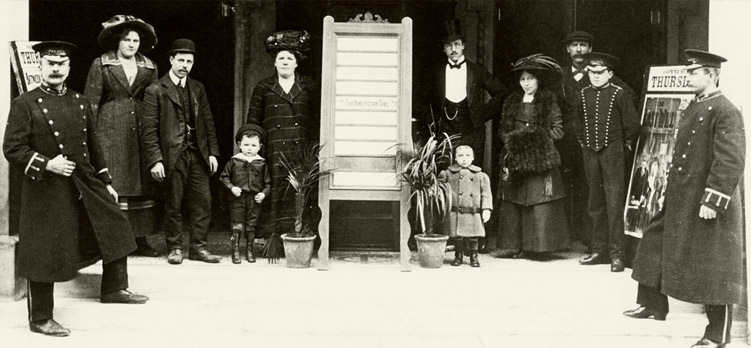
 The staff in 1912
In the East Coast floods of 1953 the auditorium was under eight feet of sea water and never really recovered. The mid 50s also saw high cinema taxes and the blossoming of television. It closed in 1956 and stood derelict until 1972 when it was discovered during a 'town study' by Gordon Miller and the students of Kingston Polytechnic. At this time the then local authority had planned to demolish all the buildings in the block and to replace them with a lorry park.
The historic importance of the cinema was realised by the Harwich Society and a 'spot listing' was invoked. This confers immediate statutory protection. The cinema then suffered further vandalism until, in 1975, Harwich Electric Palace Trust was formed to restore it and bring it back into use. The Trust leased the building from the new local authority and several years later purchased the freehold.
Since reopening the cinema has been managed by Electric Palace (Harwich) Ltd. a subsidiary of the charitable Trust which owns the building.
 The Electric Palace at the time of the East Coast floods in 1953
The Limited Company usually makes a small annual profit which is paid over to the charitable Trust and thereby used for the maintenance and upgrading of the building. Club Membership fees are also transferred to the Trust enhancing the funds available for insurance cover and maintenance. The cinema is independent and receives no subsidies unless it applies for grants to cover special events such as an Anniversary.
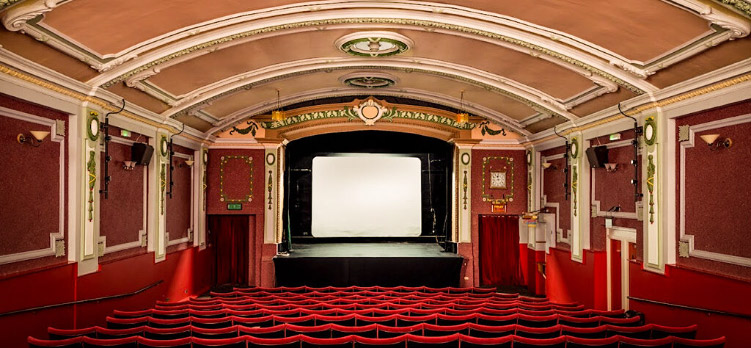
The Local Authority is now totally in tune with the preservation and upkeep of the cinema which has featured in many publicity brochures in recent years. The Trust has been successful in attracting £99,000 of Lottery Grant from the Arts Council of England with the result that most of the fabric is in better condition than ever before. There is good access for the disabled, an induction loop and new toilet facilities. The seating, carpeting, projection equipment and sound system have all been upgraded but upkeep of a cinema of this age is an on-going process.
In October 2000 the listed grading of the cinema was raised from Grade II to Grade II*. The motivation for the project has been the saving and restoration of a very special building and the revival of cinema in a community that had had no cinema for many years. The success of a venture such as this is fragile as it depends on inspiration, goodwill, on-going support by the members and, vitally, continued enjoyable participation by all the volunteers.
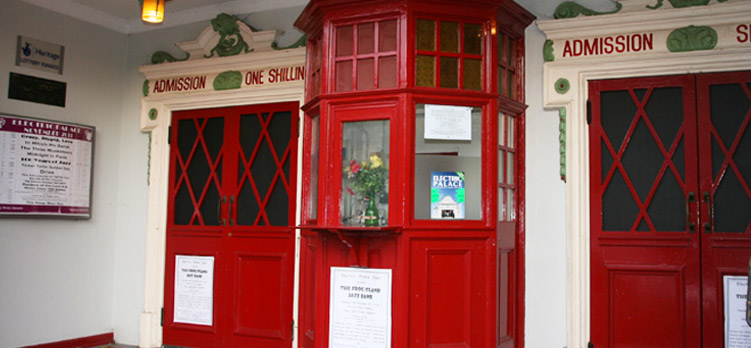
 The paybox in the foyer entrance
Read More
|